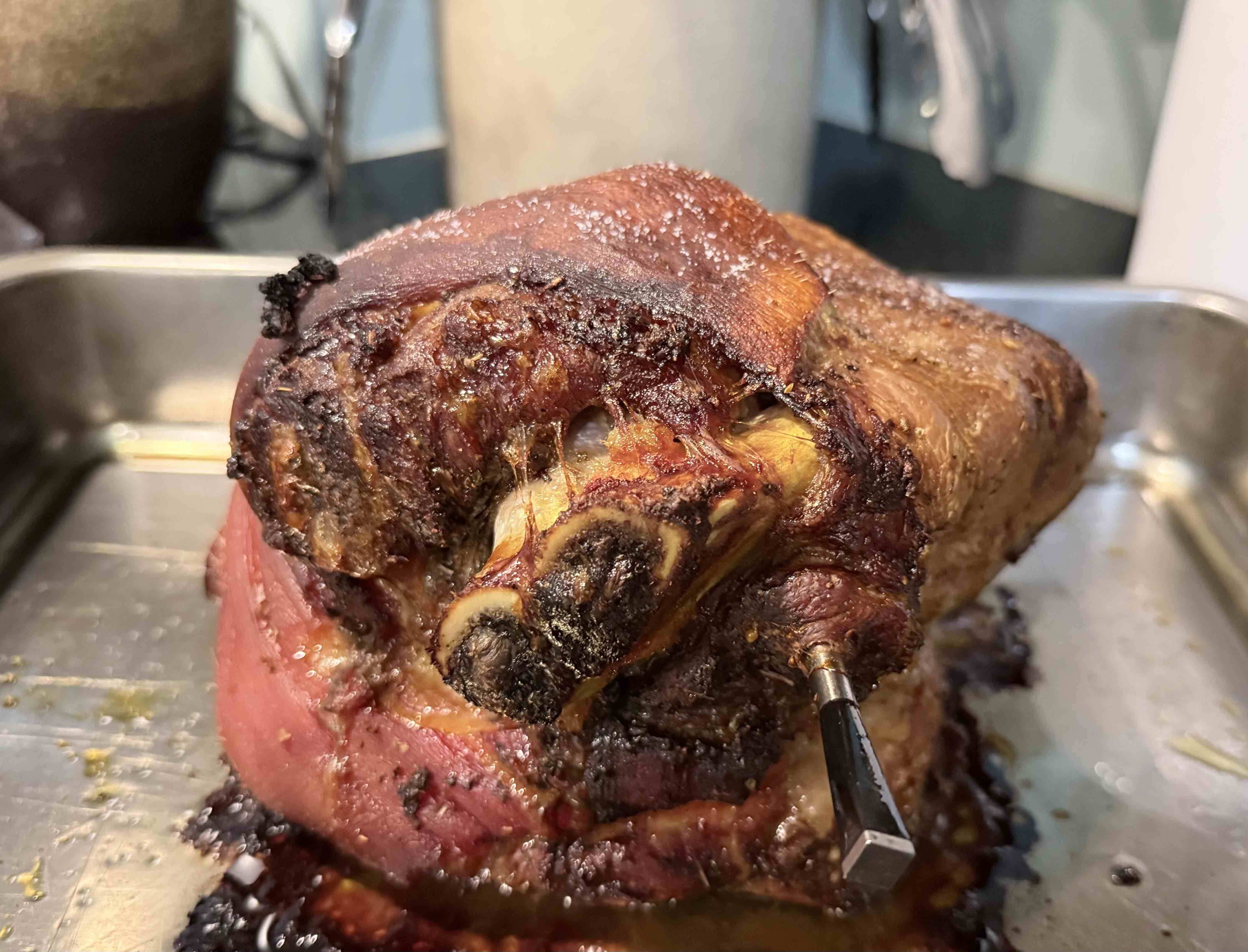
Pernil
Puerto Rican Pernil — The Ultimate Celebration Pork with Crackling Skin
When Puerto Rican families want to mark a special occasion, pernil is what fills the table. This bone-in pork shoulder gets massaged with a garlic-heavy sofrito paste, marinated for days, then slow-roasted until the meat shreds effortlessly while the skin turns into golden, crackling armor.
If you want to understand Puerto Rican celebration cooking, start with pernil. This isn't just roasted pork — it's the centerpiece that brings families together for Christmas morning, New Year's Day, and every milestone worth marking. The preparation becomes its own ritual: massaging garlic paste deep into the meat, wrapping it carefully, then waiting as days of patient marination work their transformation.
The magic happens in two stages that couldn't be more different. First comes the long, gentle roast that turns tough shoulder into something so tender it falls apart at the touch of a fork. Then the oven cranks to blazing heat, creating a skin so crisp it shatters like glass when you tap it. That contrast — yielding meat beneath crackling armor — is what makes pernil legendary in Puerto Rican kitchens.
Yes, this recipe demands time and planning. The marination alone takes at least twelve hours, preferably several days. But that's precisely why it works for celebrations — you do the heavy lifting well ahead, then let the oven handle the rest while you focus on your guests. When that first piece of crackling hits the plate alongside impossibly tender pork, you'll understand why Puerto Rican cooks have been perfecting this technique for generations.
Ingredients
- 10 lbbone-in pork shoulder with skin, about 10 pounds
- ¼ cupwhite vinegar
- 16 clovegarlic cloves, peeled and mashed to a smooth paste
- 2 tbspsofrito (homemade or store-bought)
- 2 tbspadobo seasoning
- 2 tbsponion powder
- 1½ tbspsazón seasoning
- 1½ tbspdried oregano leaves
- ½ tbspkosher salt, plus extra for finishing
- 1½ tspfreshly ground black pepper
Instructions
- Mix the mashed garlic paste with sofrito, adobo, onion powder, sazón, oregano, salt, and pepper in a bowl until you have a thick, aromatic paste. The mixture should hold together well and smell intensely of garlic and spices.
- Work your sharp boning knife carefully between the skin and meat to create a deep pocket, keeping the skin attached along the back and sides. This pocket is where most of your seasoning paste will live, so make it roomy but don't cut all the way through.
- Stab the exposed meat all over with your knife tip, creating deep slits about an inch apart without piercing the skin. Turn the shoulder over and repeat on the bottom — these cuts help the seasoning penetrate and the tough fibers break down during the long cook.
- Drizzle the vinegar everywhere — over the meat surface, inside the pocket you created, and on the skin. Work it in with your hands, getting into every crevice. The acid helps tenderize the meat and carries the flavors deep inside.
- Take about a third of your spice paste and pack it into the pocket between skin and meat, working it down with your fingers. Press more paste into the slits you made, really massaging it into the meat — don't be shy here.
- Turn the pork over and coat the bottom with another third of the paste, then flip it back skin-side up and spread the remaining paste all over the skin. Every surface should be covered in this fragrant mixture.
- Wrap the seasoned pork tightly in plastic wrap, then wrap again in aluminum foil to prevent any leaks. Set it on a rimmed baking sheet to catch any drips that might escape.
- Refrigerate for at least 12 hours, but ideally 2-3 days. The longer marination lets the salt and acid work their magic, breaking down tough connective tissue while the spices permeate every fiber.⏱ 48 hrs
- Remove all wrapping and place the pernil on a roasting rack set inside a roasting pan. Pat the skin completely dry with paper towels and scrape off any excess paste — you want clean skin for proper crackling.
- Let the pork come to room temperature for 30-60 minutes while you position an oven rack in the lower third and preheat to 250°F. Cold meat straight from the fridge cooks unevenly, so this step matters.⏱ 30 min
- Roast at 250°F for about 10 hours, or until an instant-read thermometer reads 180-190°F in the thickest part. This low temperature breaks down all that tough collagen into silky gelatin — rushing this stage ruins everything.⏱ 5 hrs
- Pull the pernil out and crank your oven to 425°F. Let it preheat fully while the pork rests — this dramatic temperature jump will create the crackling skin you're after.
- Sprinkle the skin lightly with kosher salt and transfer to a clean, dry roasting pan. Any accumulated drippings will prevent proper browning, so starting fresh is important here.
- Blast at 425°F for up to an hour, rotating the pan every 15 minutes for even browning. You'll know it's ready when the skin sounds hollow and hard when you tap it with a spoon — like knocking on wood.⏱ 1 hr
- Check that your thermometer reads 180-200°F and the juices run clear when you pierce the meat. The internal temperature should have climbed during the high-heat finish, ensuring everything is perfectly cooked through.
- Rest the pernil for 30 minutes before carving — this lets the juices redistribute so they don't run out when you shred. Remove the crackling skin in large pieces, then pull the meat apart with two forks.⏱ 30 min
Notes
5 pound pernil= 5 hours roasting time 7 pound= 7 hours 10 pound= 10 hours
Tips & Tricks
- Score the meat in a crosshatch pattern before applying the paste — deeper cuts mean better seasoning penetration and more tender results.
- Save some of the rendered fat from the roasting pan; it makes incredible rice or can be used for roasting vegetables later.
- If your crackling isn't crispy enough after an hour at high heat, turn on the broiler for the last 5-10 minutes, watching carefully to prevent burning.
- The internal temperature will continue rising during the high-heat phase, so don't worry if it reads slightly under 180°F when you first pull it out.
- Leftover pernil makes exceptional sandwiches — just reheat gently in a skillet with a splash of the reserved drippings.
Frequently Asked Questions
Can I make this with a smaller pork shoulder?
Absolutely — just adjust the cooking time to about one hour per pound at 250°F. A 5-pound shoulder will need around 5 hours of slow roasting before the high-heat crackling phase.
What if I can't find sofrito at my grocery store?
You can make pernil without it, though you'll lose some authentic flavor. Add an extra tablespoon of minced garlic, a teaspoon of ground cumin, and a finely diced small bell pepper to the spice paste as a substitute.
How far ahead can I prepare this?
The seasoned pork can marinate for up to 5 days in the refrigerator — longer actually improves the flavor. You can also cook it completely the day before and reheat gently, though the crackling won't be quite as crisp.
Why isn't my skin getting crispy?
Make sure the skin is completely dry before the high-heat phase, and use a clean roasting pan without any accumulated juices. Moisture is crackling's enemy, so pat everything dry and start fresh for that final blast of heat.