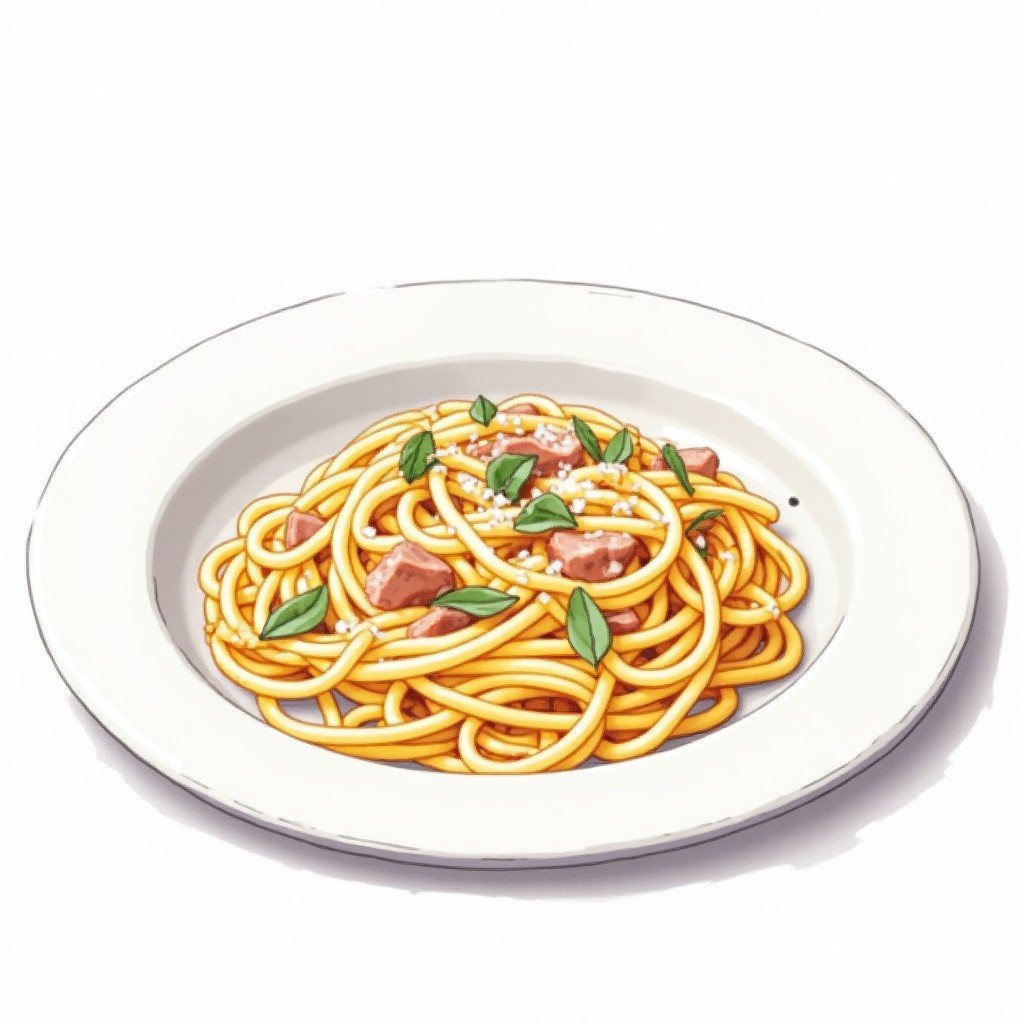
Pasta alla Gricia
Pasta alla Gricia — Rome's Three-Ingredient Masterpiece with Guanciale and Pecorino
This is Roman cooking stripped to its essence: crispy guanciale renders into golden fat, black pepper blooms in the heat, and sharp Pecorino melts into silk. The magic happens when starchy pasta water transforms these simple elements into something greater than their parts.
Romans have a saying: "Chi ha tempo non aspetti tempo" — he who has time shouldn't wait for time. It applies perfectly to gricia, the pasta dish that taught me the difference between simple and easy. With just guanciale, Pecorino, and black pepper, there's nowhere for mistakes to hide, yet the technique demands precision that comes only with practice.
Gricia sits at the foundation of Rome's holy trinity of pasta dishes. Add eggs and you have carbonara. Include tomatoes and you get amatriciana. But gricia stands alone as the purest expression of the technique — that magical moment when rendered pork fat, sharp cheese, and starchy pasta water emulsify into something silky and cohesive. The dish originated in the mountains above Rome, where shepherds carried these shelf-stable ingredients on long journeys.
The secret lies in understanding emulsion. When hot pasta meets the rendered guanciale fat and you work in the cheese off the heat, you're creating a sauce through pure technique rather than added cream or butter. The starch from properly cooked pasta water acts as the binding agent, turning what could be a greasy mess into liquid gold. Get the timing right, and you'll understand why Romans have been perfecting this dish for generations.
Nutrition
Ingredients
- 1 lbspaghetti or tonnarelli
- 5 ozguanciale, diced
- 1 cupPecorino Romano, finely grated
- 1 tspblack pepper, freshly ground
- salt for pasta water
Instructions
- Get your largest pot filled with water and salt it well — the pasta will absorb this seasoning as it cooks, so don't be shy.
- Start the guanciale in a cold, large pan and let it slowly render over medium heat until the pieces turn golden and crispy, about 8 minutes. Don't rush this — you want every bit of fat to cook out.⏱ 8 min
- Drop the pasta into your now-boiling water and cook until al dente according to package directions. It should still have a slight bite when you test it.
- Before you drain anything, scoop out 1 cup of that starchy pasta cooking water — you'll need it to bind the sauce.
- Sprinkle the black pepper directly into the rendered guanciale fat and let it sizzle for 30 seconds. The heat will wake up those peppercorns and make them fragrant.⏱ 30 sec
- Drain the pasta and immediately add it to the pan with the guanciale, tossing everything together while the pasta is still steaming hot.
- Pull the pan off the heat and work in half the Pecorino, adding splashes of pasta water as you toss. The residual heat will melt the cheese without seizing it.
- Keep tossing and gradually work in the remaining cheese, adding more pasta water as needed until you have a creamy sauce that coats every strand.
- Plate immediately and pass extra Pecorino and freshly cracked pepper at the table — this dish waits for no one.
Tips & Tricks
- Save pasta water before you think you need it — the starchy liquid is your sauce's best friend, and you can't get it back once you've drained the pot.
- Cut guanciale into matchsticks rather than cubes for better fat rendering and more surface area to get crispy.
- Work the cheese in gradually off the heat to prevent it from seizing into grainy clumps — the residual heat from the pasta is all you need.
- If your sauce breaks or looks greasy, add a splash more pasta water and toss vigorously to bring the emulsion back together.
- Use the widest pan you have so the pasta can move freely when you toss it — cramped pasta won't coat properly with the sauce.
Frequently Asked Questions
Can I use pancetta or bacon instead of guanciale?
Pancetta will work in a pinch, but guanciale's higher fat content and distinct flavor make all the difference. Bacon is too smoky and will overpower the dish's delicate balance.
What if I can't find Pecorino Romano?
Parmigiano-Reggiano can substitute, though you'll get a milder, nuttier flavor instead of Pecorino's sharp bite. Use the same amount and technique.
Why does my sauce look greasy instead of creamy?
This usually happens when the pan is too hot when adding cheese, or you haven't used enough pasta water. Take the pan off heat completely and add more starchy water while tossing vigorously.
Can I make this ahead of time?
Gricia is best served immediately — the emulsion breaks down as it cools. If you must reheat, add a splash of hot water and toss gently over low heat.