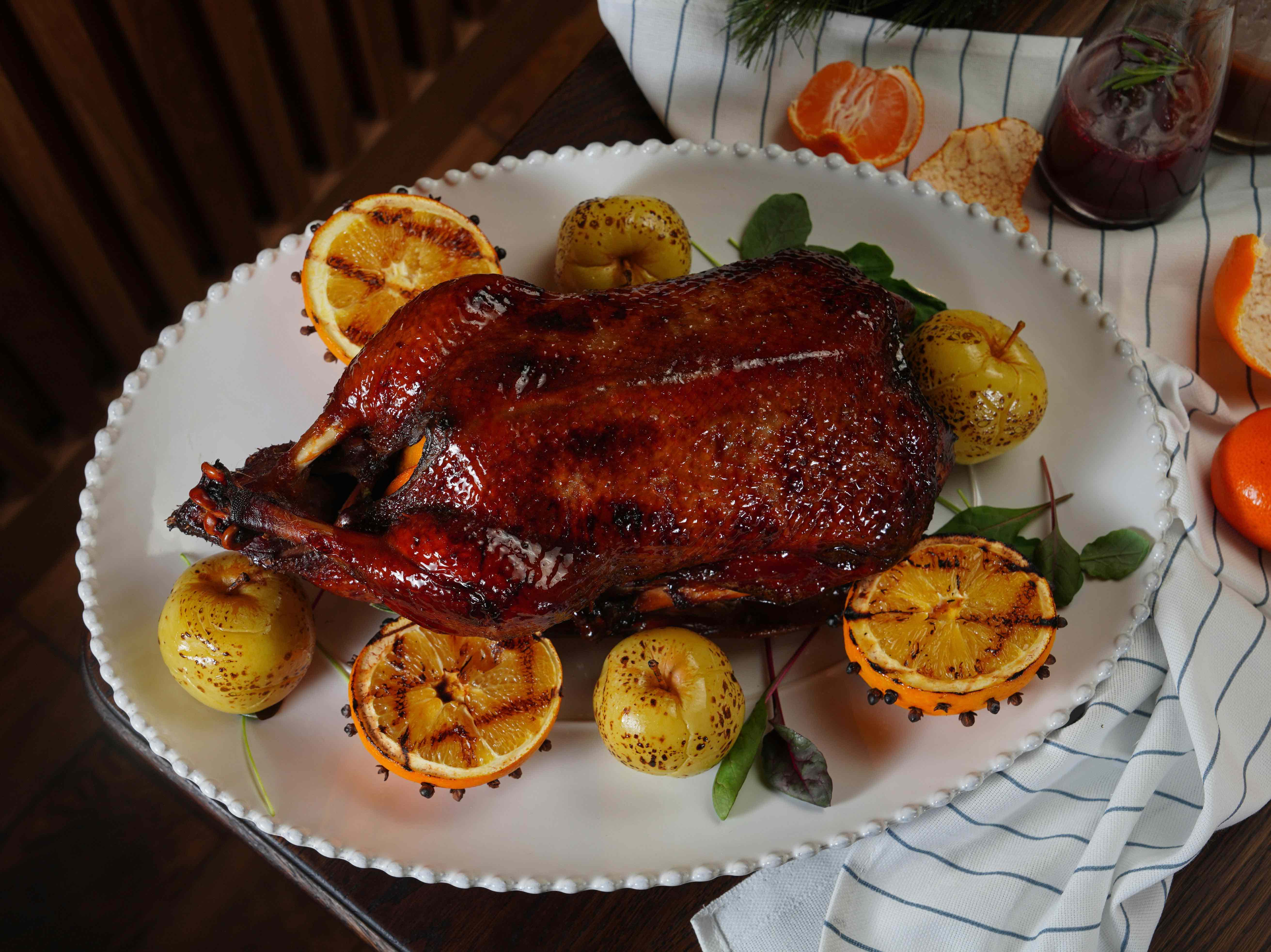
Duck a l'Orange
Duck à l'Orange — French Roasted Duck with Grand Marnier Glaze
There's something deeply satisfying about watching duck skin slowly render its fat while orange and cognac meld into a glossy, restaurant-quality sauce. This is French technique at work — patient roasting that transforms a rich bird into something extraordinary, finished with a sauce that balances sweet marmalade against the bright acidity of fresh citrus.
Duck à l'orange carries the weight of classic French cuisine on its shoulders, but underneath all that culinary prestige lies a surprisingly straightforward marriage of rich meat and bright citrus. The dish appeared on bourgeois tables in the 17th century when orange cultivation spread across France, and cooks discovered that the fruit's acidity was the perfect foil to duck's luxurious fat.
The real magic happens during that long, slow roast. Duck skin transforms from pale and flabby to bronze and crackling, while layers of fat render away to reveal impossibly tender meat underneath. Meanwhile, your kitchen fills with the aroma of caramelizing skin and the warm spice of cognac reduction — a preview of the feast to come.
This isn't a dish you rush through on a Tuesday night. Duck à l'orange asks for patience and rewards it handsomely. The sauce alone — bright with fresh orange juice, deepened with Grand Marnier, glossed with butter — elevates the already spectacular bird into something that belongs on your most important tables. When you carve into that golden skin and the juices run clear, you'll understand why this combination has endured for centuries.
Nutrition
Ingredients
- 1 whole duck, 4-5 pounds, giblets removed
- 2 tspkosher salt
- 1 tspfreshly ground black pepper
sauce
- 2 largelarge oranges, zested and juiced (about 3/4 cup juice)
- 1 cuplow-sodium chicken stock
- ½ cupquality orange marmalade
- ¼ cupGrand Marnier or other orange liqueur
- 2 tbspred wine vinegar
- 2 tbspcold unsalted butter, cut into pieces
- 1 tbspcornstarch
Instructions
- Position a rack in the lower third of your oven and heat to 425°F. Set a wire rack inside a rimmed baking sheet or roasting pan.
- Using a sharp knife, score the duck skin in a crosshatch pattern, cutting through the skin but not into the meat — this helps the fat render properly. Pierce the skin all over with a fork, focusing on the fattiest areas around the thighs and breast.
- Rub the salt and pepper all over the duck, inside the cavity and on the skin. Don't be shy here — duck needs assertive seasoning to balance its richness.
- Place the duck breast-side up on the wire rack. The rack keeps the duck elevated so it roasts evenly rather than sitting in its own fat.
- Roast for 20 minutes at 425°F, then reduce the temperature to 350°F and continue cooking for about 2 hours more. The duck is done when an instant-read thermometer inserted into the thickest part of the thigh reads 165°F. The skin should be deep golden and crispy.⏱ 2 hrs 20 min
- While the duck roasts, make the sauce: combine the orange juice, chicken stock, marmalade, Grand Marnier, and red wine vinegar in a medium saucepan. Stir to dissolve the marmalade completely.
- Bring the sauce to a gentle simmer over medium heat and cook until it reduces by about half — it should coat the back of a spoon lightly. This concentrates all those bright orange flavors.⏱ 15 min
- Whisk the cornstarch with 2 tablespoons of cold water until smooth, then stir this slurry into the simmering sauce. This prevents lumps and ensures a silky texture.
- Simmer the sauce for 2 minutes until it thickens to a glossy, coating consistency. Remove from heat and whisk in the cold butter pieces one at a time, then stir in the orange zest. The butter adds richness and shine.⏱ 2 min
- Let the duck rest for 10 minutes before carving — this allows the juices to redistribute. Carve into portions and serve immediately with the warm orange sauce spooned over or alongside.⏱ 10 min
Tips & Tricks
- Save that rendered duck fat — it's liquid gold for roasting potatoes or sautéing vegetables. Strain it through a fine mesh and store in the fridge for up to a month.
- If your duck starts browning too quickly during the long roast, tent it loosely with foil but keep the legs uncovered so they can continue crisping.
- The sauce should coat a spoon but still pour easily — if it gets too thick, thin with a splash of chicken stock rather than water to maintain the rich flavor.
- Don't skip the resting period after roasting. Duck needs those 10 minutes for the meat fibers to relax and retain their juices when you carve.
- For extra flavor depth, add the duck's neck and wing tips to your roasting pan during the last hour — they'll brown beautifully and add richness to any pan drippings.
Frequently Asked Questions
Can I make the orange sauce ahead of time?
Yes, the sauce keeps well for up to two days in the refrigerator. Reheat gently over low heat and whisk in a little extra butter to restore its glossy finish before serving.
What if I don't have Grand Marnier?
Cointreau or any orange liqueur works perfectly, or you can substitute with cognac plus an extra tablespoon of orange zest. Even a splash of brandy will give you that warm, boozy depth.
How do I know when the duck skin is properly crisped?
The skin should be deep golden brown and make a hollow sound when you tap it lightly with a spoon. If it's still pale or soft after the full cooking time, increase the oven temperature to 450°F for the final 10 minutes.
Can I cook duck à l'orange for a smaller crowd?
Duck legs are perfect for scaling down — use 4 legs instead of a whole bird, reduce cooking time to about 1.5 hours, and halve the sauce recipe. The technique stays exactly the same.