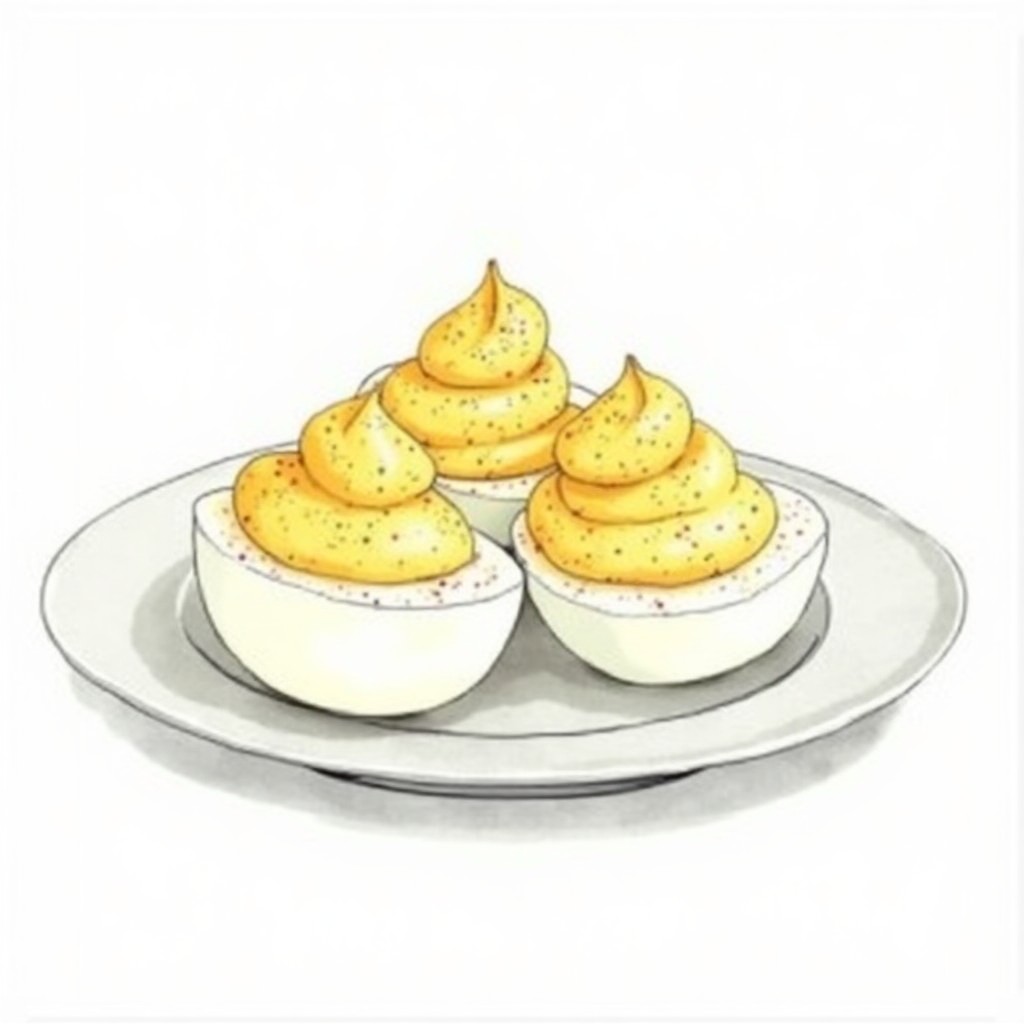
Classic Deviled Eggs
Perfect Party Deviled Eggs
There's something deeply satisfying about transforming a dozen hard-boiled eggs into these crowd-pleasing bites. The key is nailing the texture — velvety yolks that pipe beautifully and whites that peel clean without craters. Once you master the timing, you'll have a reliable go-to that disappears fast at every gathering.
The deviled egg sits at a curious crossroads between humble comfort food and elegant entertaining. Strip away the nostalgia, and you're left with something wonderfully practical: protein that's portable, flavors that please everyone, and a technique that actually gets easier with practice. The name itself comes from the 18th-century culinary term "deviling," which meant to add heat and spice — though these days, the heat comes more from demand than from cayenne.
What separates memorable deviled eggs from forgettable ones isn't exotic ingredients or fancy garnishes. It's mastering the fundamentals: eggs that peel cleanly, yolks that whip to velvet, and whites that hold their shape without weeping. The ice bath isn't optional — it's the difference between smooth, golden centers and that unfortunate gray ring that screams "overcooked." Once you nail the timing, you'll find yourself making these for everything from casual picnics to holiday spreads.
The real beauty lies in their adaptability. This classic version gives you a reliable foundation, but deviled eggs welcome improvisation. A touch of sriracha for heat, fresh herbs for brightness, or crispy bacon for richness — they all work. But master this straightforward version first, because sometimes the simplest things are the hardest to get right.
Nutrition
Ingredients
- 6 largelarge eggs, as fresh as possible
- 3 tbspmayonnaise, full-fat preferred
- 1 tspyellow mustard
- ¼ tspfine salt
- ⅛ tspfreshly ground black pepper
- paprika for garnish(optional)
Instructions
- Set the eggs in a single layer in a heavy-bottomed saucepan and cover with cold water by about an inch. Starting with cold water helps prevent cracking and ensures even cooking.
- Crank the heat to high and bring the water to a vigorous, rolling boil. You'll hear it bubbling energetically — that's your cue for the next step.
- As soon as the water reaches a full boil, kill the heat and cover the pan tightly. Let the eggs finish cooking in the residual heat — this gentle approach prevents that gray ring around the yolks.⏱ 12 min
- While the eggs sit, prepare an ice bath in a large bowl. After 12 minutes, immediately transfer the eggs to the ice water using a slotted spoon. This shock stops the cooking process and makes peeling much easier.⏱ 5 min
- Once completely cool, crack and peel the eggs under cool running water — the water helps separate stubborn shell bits. Slice each egg in half lengthwise with a sharp knife, making clean cuts.
- Pop out all the yolks into a mixing bowl and mash them thoroughly with a fork. You want them completely broken down with no lumps — this is what creates that smooth, pipeable filling.
- Fold in the mayonnaise, mustard, salt, and pepper, mixing until the mixture is completely smooth and creamy. Taste and adjust the seasoning — you might want a pinch more salt or mustard to suit your preference.
- Either spoon the yolk mixture back into the egg white halves or transfer it to a piping bag for neater presentation. If piping, a star tip creates an attractive swirled top that holds the paprika nicely.
- Dust lightly with paprika for color and a subtle smoky note, then chill in the refrigerator until ready to serve. They're best within a day or two of making.
Tips & Tricks
- Use eggs that are at least a week old — fresh eggs are notoriously difficult to peel cleanly, while older eggs release from their shells much more easily.
- If your filling seems too thick, add mayonnaise a teaspoon at a time until it's smooth and pipeable; if it's too loose, mash in an extra yolk from another batch.
- For professional-looking results, wipe the egg white edges clean before filling — any yolk residue will make them look messy.
- Make the filling up to a day ahead and store it covered in the fridge, but don't assemble the eggs until a few hours before serving to prevent the whites from getting soggy.
- A small spoon works just as well as a piping bag for filling the eggs, and you can create attractive ridges by dragging the spoon through the mixture as you mound it.
Frequently Asked Questions
Can I make these a day ahead?
Yes, but assemble them the day you plan to serve. You can prep the eggs and make the filling separately up to 24 hours ahead, then fill them a few hours before your event to keep the whites from getting watery.
What if my eggs are hard to peel?
This usually happens with very fresh eggs. Try peeling them under cool running water, starting from the wider end where the air pocket is. If you're still having trouble, use eggs that are at least a week old next time.
Why did my yolk filling turn out lumpy?
The yolks weren't mashed thoroughly enough before adding the wet ingredients. Use a fork to completely break them down until no chunks remain, then gradually mix in the mayonnaise and seasonings.
Can I substitute the mayonnaise?
Greek yogurt works well for a tangier, lighter version, though the texture will be slightly less rich. Use the same amount and add a little extra mustard to compensate for the reduced fat.
How long will these keep in the refrigerator?
Assembled deviled eggs are best within 24-48 hours. After that, the whites start to release moisture and the texture suffers, though they're still safe to eat for up to 4 days.