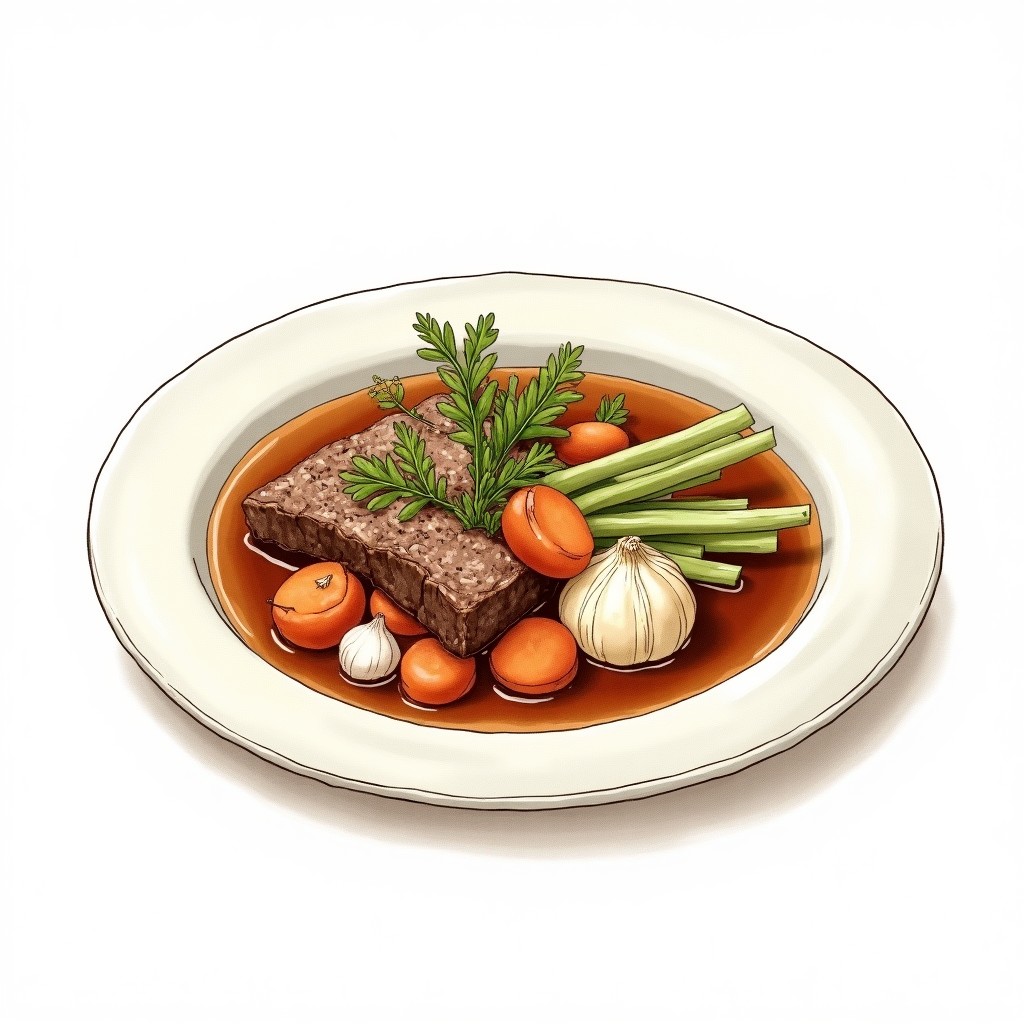
Brown Stock
Deep Brown Stock — The Foundation Every Serious Cook Needs
Real brown stock takes time and patience, but the payoff is liquid gold that transforms everything it touches. Roasted bones and vegetables simmer away for hours, building layers of rich, meaty flavor that no store-bought version can match.
Real brown stock is one of those things that separates home cooks from restaurant kitchens — and it shouldn't be. Yes, it takes the better part of a day, but most of that time is hands-off simmering while you go about your life. What you get in return is something truly special: a foundation that can elevate simple pan sauces, transform leftover vegetables into elegant soups, and turn tough cuts of meat into restaurant-quality braises.
The French call this fond brun, and for good reason — it's the literal foundation of classic cooking. Those roasted bones aren't just adding flavor; they're breaking down into gelatin that gives body and richness to everything you make with this stock. The vegetables caramelize alongside the bones, building layers of sweetness and depth that no amount of seasoning can replicate.
Once you taste what real stock brings to your cooking, you'll understand why professional kitchens always have a pot simmering on the back burner. This isn't about being fancy — it's about understanding that some shortcuts aren't worth taking. Make a big batch, freeze it in portions, and suddenly you have the secret ingredient that makes everything better.
Ingredients
- 3 lbbeef bones, preferably knuckle and marrow bones
- 2 onions, peeled and halved
- 2 celery stalks, quartered
- 2 carrots, quartered
- cold water to cover
- salt to taste(optional)
- freshly ground black pepper to taste(optional)
For herb bouquet
- 2 clovegarlic cloves
- 3 fresh parsley sprigs
- 1 fresh thyme sprig
- 2 whole cloves
- 1 bay leaf
- cheesecloth for bundling herbs
Instructions
- Set your oven to 400°F and let it fully preheat while you get everything ready. This moderate heat will brown the bones without burning them.
- Bundle the garlic, parsley, thyme, cloves, and bay leaf tightly in cheesecloth and tie with kitchen twine. This bouquet garni will infuse the stock with aromatics without leaving loose herbs floating around.
- Spread the bones, onions, and carrots on a large rimmed baking sheet and roast for 40 minutes, flipping the bones every 15 minutes so they brown evenly. You want deep caramelization all over — this is where your stock gets its rich color and flavor.⏱ 40 min
- Move the roasted bones to your largest stock pot, then scrape in all the vegetables and any browned bits from the pan. Nestle the herb bouquet in with everything else.
- Pour in enough cold water to cover everything by about 2 inches. Cold water helps draw out more gelatin from the bones than hot water would.
- Bring to a gentle simmer over medium-high heat, then reduce to low and keep it at a bare simmer for 4 to 6 hours. Skim off any foam or impurities that rise to the surface every 30 minutes or so — this keeps your stock clear and clean-tasting.⏱ 6 hrs
- Taste and season lightly with salt and pepper if desired, though many cooks prefer to season the final dish instead. Let the stock cool completely at room temperature before refrigerating.
- Chill the stock overnight in the refrigerator. The fat will solidify on top in a layer that's easy to lift off with a spoon — removing it gives you a cleaner, more versatile stock.
- Strain out all the solids and portion the finished stock into freezer bags or containers. It keeps for 3 days refrigerated or up to 6 months frozen — and good stock is worth its weight in gold for soups, sauces, and braises.
Notes
Classic French style Fond Brun. This is the base for Espagnole Sauce, Demi-Glace and Marchand de Vin.
Tips & Tricks
- Don't skip the roasting step — those caramelized bones and vegetables are what give brown stock its signature deep color and rich flavor.
- Keep the simmer as gentle as possible; big bubbles will make your stock cloudy and can break down the proteins too much.
- A properly made stock will gel when cold thanks to all that collagen from the bones — if yours doesn't set up, simmer it longer to concentrate.
- Save your vegetable scraps in the freezer and toss them in during the last hour of cooking for extra flavor without waste.
- Remove the fat cap only after it's completely solidified — trying to skim warm fat just makes a mess and wastes good stock.
Frequently Asked Questions
Can I use different types of bones?
Absolutely — knuckle bones, marrow bones, and meaty bones like oxtail all work beautifully. A mix gives you the best of both worlds: gelatin from the knuckle bones and flavor from the meaty ones.
How do I know when the stock is done?
After 4-6 hours, the bones should look pale and the liquid should be a rich brown color. Test it by chilling a small portion — good stock will have a jelly-like consistency when cold.
Can I make this in a slow cooker?
You can finish it in a slow cooker after roasting, but you'll still need to roast the bones and vegetables in the oven first. Set the slow cooker to low and cook for 12-16 hours.
Why does my stock taste bland?
Bland stock usually means the bones weren't roasted long enough or the stock needs more time to concentrate. Try simmering it uncovered for another hour to reduce and intensify the flavor.