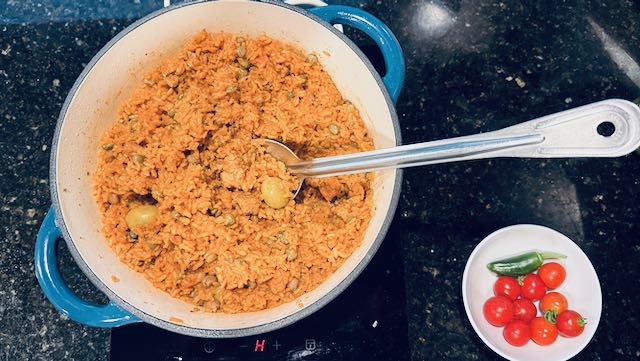
Arroz con Gandules
Arroz con Gandules — Puerto Rico's Perfect Rice with Pigeon Peas
This is the dish that defines Sunday dinners in Puerto Rican homes — tender rice studded with pigeon peas, seasoned pork, and the holy trinity of sofrito, olives, and capers. The technique here matters: properly toasting the rice before adding liquid creates individual grains that absorb all those rich flavors without turning to mush.
Walk into any Puerto Rican home on a Sunday and you'll find this dish simmering away, filling the kitchen with the kind of aroma that makes neighbors suddenly remember they need to visit. Arroz con gandules isn't just rice and beans — it's the soul of Puerto Rican cooking wrapped up in one pot, where each grain captures the essence of sofrito, pork fat, and the briny punch of olives and capers.
The technique separates good arroz con gandules from transcendent arroz con gandules. That initial toasting of the rice isn't optional — it's what creates grains that stay distinct and fluffy while soaking up every drop of flavor from the cooking liquid. The sofrito provides the aromatic foundation, while the gandules (pigeon peas) add their earthy sweetness that makes this dish more substantial than plain rice but lighter than a heavy stew.
This version builds flavor in layers, starting with properly seasoned pork that renders its fat into the cooking oil, then blooming the sofrito until it darkens and releases its full fragrance. The final steaming technique — that double seal with foil and lid — creates the perfect environment for the rice to finish cooking in its own steam. What emerges is rice that's fluffy but cohesive, with each grain tender but never mushy, studded with pork and gandules that have absorbed all those complex flavors.
Ingredients
Spice Blend
- 1 tbspadobo seasoning
- 2½ tspsazón con achiote
- 2 tsponion powder
- 2 tspgranulated garlic
- 1 tspdried oregano leaves
- ¾ tspfreshly ground black pepper
For the Arroz con Gandules
- 1 cupbone-in pork chops, cut into small chunks
- ¼ cupextra virgin olive oil
- 3 cuplong grain white rice, rinsed until water runs clear
- ½ cupsofrito (homemade or store-bought)
- ½ cuptomato sauce
- 6 manzanilla olives, pitted and left whole
- 1 tspcapers, drained
- 1 tspchicken bouillon base (like Better Than Bouillon)(optional)
- 2 cupwater plus liquid from gandules can
- 15½ ozgandules (pigeon peas), drained with liquid reserved
- kosher salt
Instructions
- Whisk together the adobo, sazón, onion powder, granulated garlic, oregano, and black pepper in a small bowl until evenly distributed. This custom blend gives the dish its signature flavor.
- Toss the pork chunks with 1 heaping teaspoon of your spice blend, making sure every piece gets coated. Set aside and let the flavors penetrate for 30 minutes — this step builds depth into the meat.⏱ 30 min
- Heat the olive oil in a 5-quart Dutch oven over medium-high heat until it shimmers and moves easily around the pan. You want it hot enough to properly sear the pork.
- Drop in the seasoned pork and let it sizzle, stirring frequently to brown all sides evenly. This takes 3-4 minutes — you're building a flavorful fond on the bottom of the pot.⏱ 4 min
- Pour the rinsed rice directly into the pot with the pork and rendered fat. Stir constantly for 2-3 minutes until the grains turn glossy and lightly golden — this toasting step prevents mushy rice later.⏱ 3 min
- Stir in the sofrito and let it bloom for 2 minutes, scraping up any browned bits from the bottom. The sofrito should be fragrant and slightly darkened.⏱ 2 min
- Add the tomato sauce, remaining spice blend, and water mixed with the reserved gandules liquid. Stir everything together until the liquid looks evenly colored.
- Scatter in the olives, capers, chicken base if using, and drained gandules. Give everything a thorough stir to distribute the ingredients evenly throughout.
- Bring the mixture to a vigorous boil and let it bubble away for 8-10 minutes, until you can see the rice surface peeking through the liquid in spots. Don't stir during this time.⏱ 10 min
- Using a large spoon, gently fold the rice from the outside edges toward the center, working your way around the pot. Spread everything back into an even layer and reduce heat to low.
- Cover tightly with aluminum foil, then place the lid on top — this double seal prevents steam from escaping. Steam on low heat for exactly 20 minutes without peeking.⏱ 20 min
- Fold the rice again and taste a grain. If it's still firm, add 1/4 cup water and steam 10 more minutes. If it's too soft, cook uncovered for 10 minutes to evaporate excess moisture.⏱ 10 min
- Cover again, turn off the heat, and let the pot rest on the warm burner. This final steaming finishes the rice perfectly and keeps it warm until serving time.
Tips & Tricks
- Reserve the liquid from the canned gandules — it's packed with flavor and helps create the cooking liquid that gives the rice its signature taste.
- Don't skip the 30-minute marinating time for the pork; this step ensures the spices penetrate the meat instead of just coating the surface.
- The rice should look glossy and sound different when you stir it during the toasting phase — this usually takes 2-3 minutes and prevents sticky, clumpy results.
- If your rice seems too dry after the first steaming, add water in small amounts (1/4 cup at a time) rather than flooding the pot.
- Let the pot rest off the heat for at least 10 minutes after cooking — this final steaming step is crucial for perfectly tender rice.
Frequently Asked Questions
Can I use a different type of rice for this recipe?
Stick with long-grain white rice for the best results — it holds its shape during the long cooking process and absorbs flavors without becoming mushy. Medium-grain rice tends to get sticky, and brown rice requires significantly more liquid and cooking time.
What can I substitute for sofrito if I can't find it?
You can make a quick version by blending 1/2 cup each diced onion, bell pepper, and tomato with 3 garlic cloves and a handful of cilantro. Store-bought sofrito works fine, but homemade gives you more control over the salt level.
Can I make this vegetarian?
Absolutely — skip the pork and use vegetable broth instead of the water and gandules liquid combination. Add an extra tablespoon of olive oil at the beginning to compensate for the missing pork fat, and consider stirring in some diced bell peppers for extra substance.
Why is my rice coming out mushy or sticky?
This usually happens when you skip the rice toasting step or add too much liquid at once. Make sure to toast the rice until it's glossy before adding liquids, and if it seems too wet during cooking, remove the lid and let excess moisture evaporate.